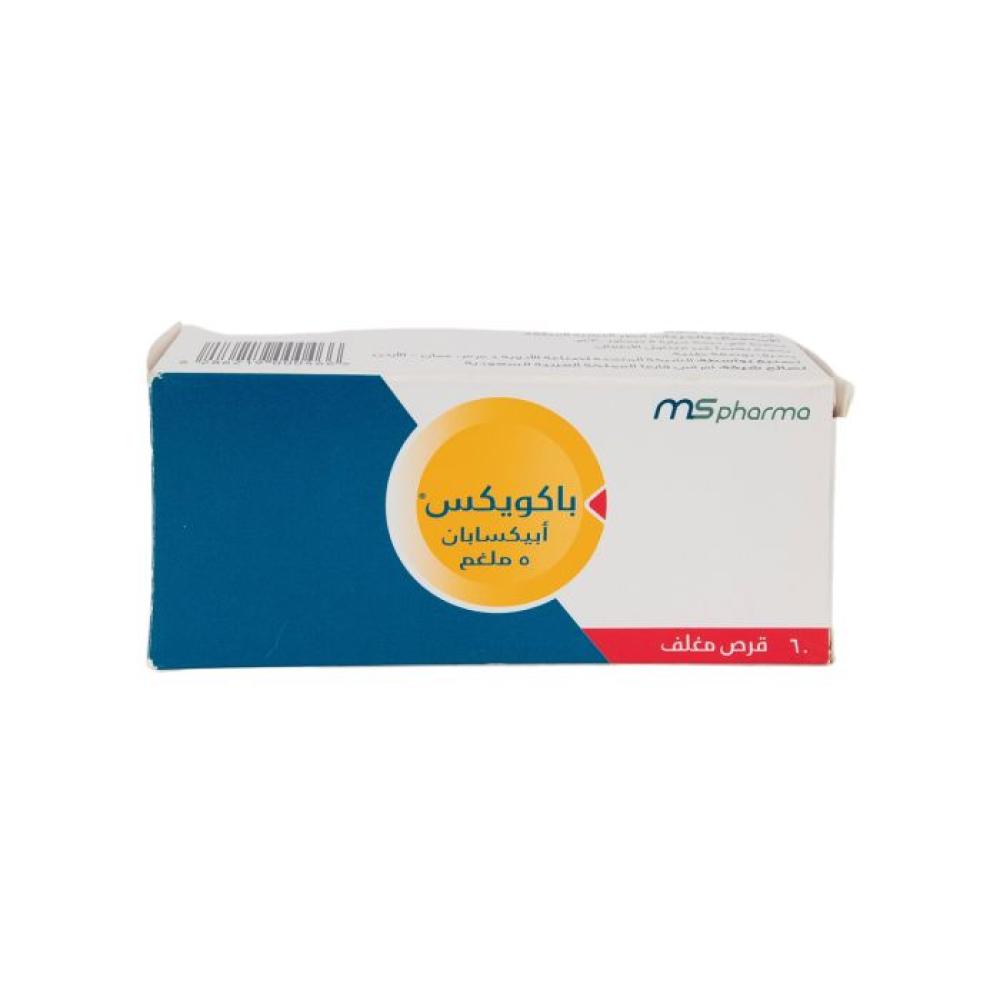
Product Description:
- Paquix contains the active ingredient apixaban and belongs to a group of medicines called anticoagulants.
- This medicine helps prevent blood clots by blocking factor XA, which is an important component of blood clotting.
Pacoix is used in adults:
- To prevent blood clots (deep vein thrombosis) after hip or knee replacement surgery.
- After hip or knee surgery, you may be at greater risk of developing blood clots in the veins of your legs.
- This can cause swelling of the legs, with or without pain.
- If a blood clot travels from your leg to your lungs, it can block blood flow, causing shortness of breath, with or without chest pain.
- This condition (pulmonary embolism) can be life-threatening and requires immediate medical attention.
- To prevent a blood clot in the heart in patients with an irregular heartbeat (atrial fibrillation) and at least one additional risk factor.
- Blood clots may break off and travel to the brain, affecting other organs and blocking normal blood flow to that organ (also known as systemic embolism).
- A stroke can be life-threatening and requires immediate medical attention.
- To treat blood clots in the veins of your legs (deep vein thrombosis) and in the blood vessels of your lungs (pulmonary embolism), and to prevent recurrence of blood clots in the blood vessels of your legs and/or lungs.
Directions for use:
- Oral administration.
- Always take this medicine exactly as your doctor or pharmacist has told you.
- Consult your doctor, pharmacist or nurse if you are not sure.
- For Pacoix 2.5 mg, the line on the tablet is only to facilitate breaking for easy swallowing and not for dividing into equal doses.
- To prevent blood clots after hip or knee replacement surgeries.
- To prevent blood clots in the heart in patients with an irregular heartbeat and at least one additional risk factor.
The recommended dose is one 5 mg tablet of Pacoix twice a day.
The recommended dose is one tablet of Pacoix 2.5 mg twice a day if:
- You have severe kidney failure.
- You are 80 years of age or older.
- You weigh 60 kg or less.
- The recommended dosage is one tablet twice a day, for example one tablet in the morning and one in the evening.
- Try to take the tablets at the same times each day for the best therapeutic effect.
- The tablet should be swallowed with a drink of water.
- Paquix can be taken with or without food.
- Your doctor will decide how long you should continue treatment.
- To treat blood clots in the veins of your legs and blood clots in the blood vessels of your lungs.
- The recommended dose is two 5 mg Pacoix tablets twice a day for the first seven days, e.g., two in the morning and two in the evening.
- After 7 days the dose is one tablet of Pacoix 5 mg twice a day, for example one tablet in the morning and one in the evening.
Warnings and Precautions:
Do not take Paquix if:
- You are allergic to apixaban or any of the other ingredients of this medicine.
- Severe bleeding.
- You have a disease of any organ in your body that increases your risk of serious bleeding (such as an active or recent ulcer in your stomach or intestines.
- Recent bleeding in your brain.
- You have a liver disease that increases your risk of bleeding (coagulopathy).
- If you are taking medications to prevent blood clots (such as warfarin, rivaroxaban, dabigatran, or heparin), except when changing anticoagulant therapy or while you have an intravenous or arterial line and are receiving heparin through that line to keep it open.
Be especially careful with Pacoix.
Before taking Pacoix, tell your doctor about all your medical conditions, including if you have any of the following:
- Increased risk of bleeding, such as:
- Bleeding disorders, including conditions that result in decreased platelet activity
- Severe high blood pressure that is not controlled by medical treatment
- You are over 75 years old
- You weigh 60 kg or less
- Severe kidney disease or if you are on dialysis.
- Liver problem or history of liver problems Paquix should be used with caution in patients with signs of altered liver function.
- If you have an artificial heart valve.
- If your doctor decides your blood pressure is unstable or if other treatment or surgery is planned to remove a blood clot from your lungs.
- If you need to have surgery or a procedure that may cause bleeding, your doctor may ask you to temporarily stop taking this medicine for a short time. If you are not sure whether the procedure may cause bleeding, consult your doctor.
children and adolescents
- Paquix is not recommended for children and adolescents under 18 years of age.
Taking other medications, herbs, or nutritional supplements
Tell your doctor, pharmacist or nurse that you are taking, have recently taken or might take any other medicines.
Some medicines may increase the effect of Pacoix and some may decrease its effect.
Your doctor will decide whether you should be treated with Pacoix when taking these medicines and how closely you should be monitored.
The following medications may increase the effect of Pacoix and increase the chance of unwanted bleeding:
- Some medications for fungal infections (such as ketoconazole, etc.).
- Certain antiviral medications for HIV/AIDS (such as ritonavir).
- Other medications used to reduce blood clotting (eg, enoxaparin, etc.).
- Anti-inflammatory and pain medications (such as aspirin or naproxen).
- Especially if you are over 75 and taking aspirin.
- You may have an increased bleeding tendency.
- Medicines for high blood pressure or heart problems (such as diltiazem).
- The following medications may reduce Paquix's ability to help prevent blood clots:
- Medicines to prevent epilepsy or seizures (such as phenytoin, etc.).
- St. John's wort (an herbal supplement used to treat depression).
- Medicines used to treat tuberculosis or other infections (such as rifampicin)
Pregnancy and breastfeeding
- Pregnancy If you are pregnant or breastfeeding, think you may be pregnant and are planning to have a baby, ask your doctor, pharmacist or nurse for advice before taking this medicine.
- The effects of Pacoix on pregnancy and the fetus are unknown.
- You should not take Paquix if you are pregnant.
- Call your doctor immediately if you become pregnant while taking Paquix.
- Breastfeeding It is not known whether Paxil passes into the human breast milk.
- Ask your doctor, pharmacist or nurse for advice before taking this medicine while breastfeeding.
- They will advise you to either stop breastfeeding or stop/not start taking Paquix.
Driving and using machines
- Paquix has not been shown to impair your ability to drive or operate machinery.
Important information about some of the ingredients:
- Paquix contains lactose (a type of sugar).
- If your doctor has told you that you have an allergy to some sugars, contact your doctor before taking this medicine.
the components:
- Apixaban 5 mg.
- Lactose, microcrystalline cellulose, croscarmellose sodium, sodium lauryl sulfate, magnesium stearate, Opadry white and iron oxide yellow.